

Introduction
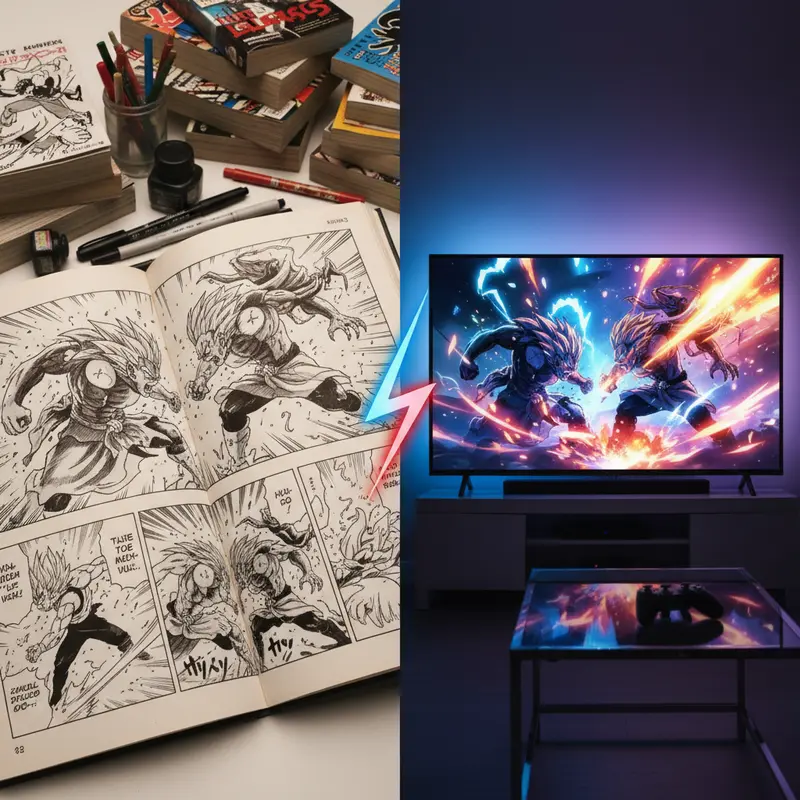
The debate between manga and anime as storytelling mediums is multifaceted, revolving around their unique characteristics and audience preferences. While both forms draw from rich traditions and offer immersive narratives, they differ significantly in delivery and artistic style. This exploration delves into their narrative depth, artistic expression, and sensory engagement, shedding light on how each medium captivates its audience.
Narrative Depth in Manga vs. Anime: Unearthing the Layers

1. The Symphony of Serial Format and Character Evolution in Manga
Manga thrives within the fertile grounds of its serial format, a unique storytelling approach that nurtures profound character evolution. As readers turn the pages of manga, they embark on a journey characterized by episodic releases that grant stories a lingering resonance through detailed character arcs and dynamic narrative structures. This method, employing both chapter autonomy and long-form continuity, invites a reader into worlds that evolve incrementally, cultivating an emotional investment over time. This is where manga’s strength emerges most distinctly: in its ability to foster an intimate connection between the audience and its characters.
Typically published in concise chapters ranging from 18 to 30 pages—or up to 50 pages for those reveling in a monthly cadence—manga capitalizes on each segment’s potential to deliver profound emotional beats and mini-revelations. These chapters frequently conclude with a cliffhanger, a narrative hook that effectively compels readers to return, thus creating a cycle of anticipation and satisfaction. This structural mastery is further exemplified in the way chapters coalesce into story arcs, which are often the backbone of a manga series. Whether detailing a climactic battle or diving into a character’s poignant past, these arcs provide the groundwork for expansive storytelling.
Unlike some Western comics, which might lean more heavily on plot over characters, manga meticulously crafts its character development through narratives like the Kishotenketsu structure. Here, the introduction sets the scene, development stretches the story’s tension, twists pivot the narrative on its head, and conclusions offer the satisfying closure that underscores character growth. This framework supports a character’s metamorphosis from naive beginnings through trials and tribulations, showcasing growth that is vividly realistic and intimately relatable.
Each episode within a manga functions as a carefully curated tapestry woven with dialogue and emotion. Sparse dialogue is employed with deliberate precision, accompanied by expressive imagery that speaks volumes. Characters’ thoughts and emotions are often conveyed through detailed facial expressions and symbolic art, elevating the static page to an emotive canvas. As much as dialogue, panel layouts dictate narrative flow, where larger frames highlight dramatic moments and smaller panels capture quick, emotional exchanges.
The inclusion of subplots and secondary characters enlivens the narrative landscape, offering various vantage points and enriching the protagonist’s journey. This multi-dimensional approach not only adds depth to the storytelling but also allows for a reflection of real-life complexities and interactions. Through these channels, manga delivers on its promise to develop its characters as enduring, evolving beings.
For those drawn to the emotional depth of storytelling, manga invites you to dwell longer in its worlds, encouraging a reflection on the themes and character arcs that color its pages. Over time, manga builds this investment into a tapestry of intricate narratives, proving that sometimes, the slow build of suspense and development yields the richest and most rewarding stories.
2. The Complexity of Condensed Pacing and Adaptation in Anime Storytelling
Anime adaptations of manga face unique challenges when it comes to pacing and story fidelity. The transition from a serialized, often lengthy manga format to the time-constrained episodes of anime necessitates careful adaptation decisions. This can result in both opportunities for creative expression and potential pitfalls that may impact storytelling depth.
Anime relies heavily on dynamic visual and auditory elements, enhancing the storytelling experience with motion, color, voice acting, and music. However, translating the extensive and often intricate plots found in manga into episodic anime can sometimes lead to condensed or simplified narratives. This is primarily because anime must fit into the episodic structure dictated by broadcast schedules.
Condensed Storylines
In adapting a manga into anime, producers and directors are often faced with the necessity to condense storylines to fit into the standard episode length of approximately 20-25 minutes. During this process, some of the manga’s content may be trimmed down or omitted entirely, potentially losing the nuanced character developments and elaborate subplots that fans of the source material cherish. In some cases, entire story arcs from the manga have to be shortened, with key events compressed into fewer episodes, affecting the pacing and emotional resonance that the manga might achieve over several volumes.
For instance, a long-running manga like Naruto or One Piece unfolds over hundreds of chapters, allowing for detailed world-building and character growth. When these are adapted into anime, there is a constant balancing act between maintaining the essence of the manga and adhering to the constraints of television formats. The challenge lies in ensuring that the anime remains engaging and true to the original spirit, even when certain complexities might be diluted.
Opportunities for Creative Interpretation
Despite these challenges, anime adaptations also provide opportunities for creative interpretation and enhancement that are less feasible in manga. Through animation, scenes can gain intensity and emotion through sophisticated visuals and soundscapes. In anime like Attack on Titan, the dynamic portrayal of action scenes and atmospheric music significantly amplify both tension and excitement, providing a visceral experience that manga alone may not be able to convey.
Furthermore, anime adaptations can expand on the visual elements of manga by using color to convey mood and symbolism, aspects that are inherently limited in the black-and-white pages of manga. Directors may also leverage voice acting to give characters a more nuanced auditory presence, bringing an additional dimension to their personalities that readers previously imagined in silence.
Balancing Act with Expectations
Ultimately, anime adaptation is a delicate balance of maintaining narrative depth while exploring new artistic avenues. Creators must navigate the expectations of manga enthusiasts who desire fidelity to the source material against the creative liberties that can lead to fresh interpretations and storytelling innovations.
In summary, while compressed pacing in anime adaptations may lead to a loss of some narrative depth, it simultaneously opens avenues for sensory-rich storytelling that can enhance the audience’s emotional engagement. As adaptations strive to retain the core story and essence of their manga origins, they often interpret the characters and worlds in ways that can delight fans, merging two storytelling mediums into a dynamic viewing experience.
For those interested in exploring the diverse possibilities of anime, you may find intriguing insights in this blog about why anime continues to dominate popular culture.
Artistic Expression in Manga vs. Anime: Which Tells the Story Better?
1. The Unique Vision and Mastery of Monochrome Art in Manga
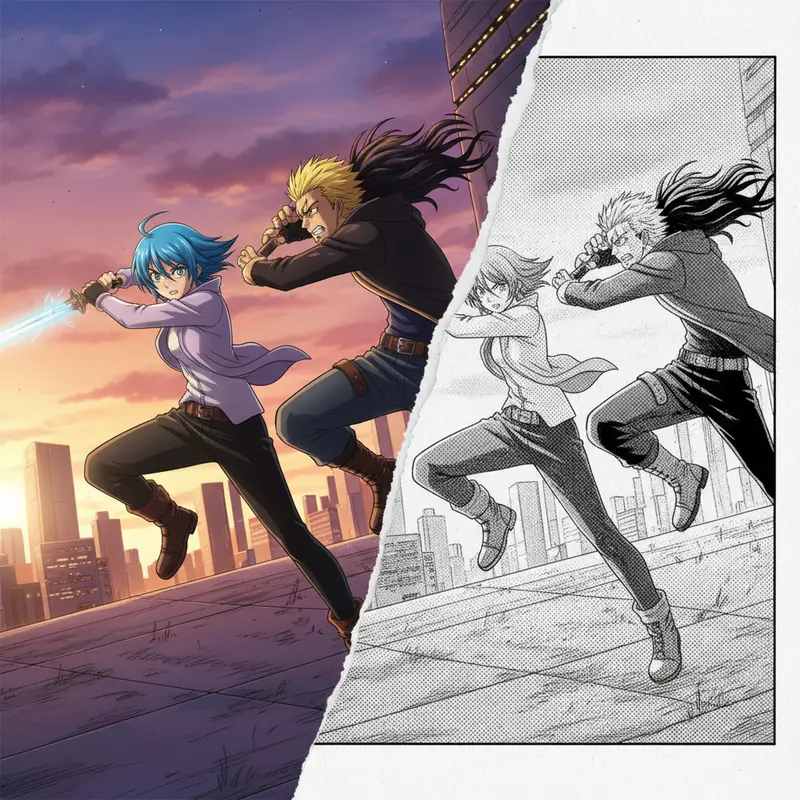
The allure of monochrome manga lies in the artistic mastery that transforms the absence of color into a canvas of expressive possibilities. Unlike anime, where vibrant hues and dynamic animations captivate audiences, monochrome manga employs the subtleties of black, white, and gray as its primary storytellers. This art form taps into a rich tradition of craftsmanship, offering a unique medium for narrative depth and emotional resonance.
Monochrome art’s strength is its ability to amplify drama and mood through contrast and shading. Mangaka, or manga artists, skillfully manipulate light and shadow to evoke tension and direct reader attention. The technique known as beta, or solid blackening, is a powerful tool, isolating characters against intense backdrops to create moments of solitude or crucial unfolding events.
Texture is another defining element. In a world devoid of color, mangaka innovate by using detailed line work and screen tones to add depth and dynamism to their illustrations. Cross-hatching—a meticulous technique utilized by celebrated artists like Junji Ito—develops atmospheric intricacies, helping set the tone for chilling horror or serene tranquility.
Furthermore, the expressive power of monochrome lies in its capacity to focus on artistic styles and personal creative influences. Each artist’s choice of line weight and composition brings a signature flair to their work, with varying line thickness creating layers of depth and guiding the reader’s gaze—transforming static images into lively, coherent narratives.
Technical adeptness is crucial in monochrome manga. Artists must navigate challenges like avoiding moiré effects when using screen tones. This technical dance demands intentional choices, ensuring patterns harmonize rather than conflict, further illustrating the meticulous labor behind these creations. Moreover, organizing digital layers efficiently allows artists the flexibility to refine intricate details without losing sight of the overall compositional balance.
Some artists push the envelope of monochrome further by introducing accent colors or manipulating grayscale palettes. These strategic decisions enhance the visual storytelling, drawing attention to key narrative elements and adding emotional significance to pivotal scenes. Whether opting for a striking splash of red to underscore a dramatic twist or employing a limited grayscale for a dreamlike aesthetic, the potential for innovation in monochrome manga is vast and inspiring.
For artists and enthusiasts looking to delve into monochrome, numerous resources provide guidance and inspiration. Books like Monochrome Illustration Techniques and online tutorials offer practical insights into mastering this art form’s distinct techniques. Engaging with communities on platforms such as Tapas Forum fosters an exchange of ideas, helping cultivate unique styles within this timeless medium.
Ultimately, the originality and depth achieved in manga’s monochrome art transcend the apparent limitations of its palette. As a medium of storytelling, it captures nuances and complexities with a distinct clarity that rivals even the most vibrant of animated scenes, maintaining a silent dialogue with the reader that is as engaging as it is profound.
2. Vibrant Strokes: The Dynamic Visual Impact of Anime
Anime, with its brilliant tapestry of colors and motion, transforms static narratives into vivid spectacles, captivating viewers with its dynamic artistry. Unlike the intricate black-and-white techniques of manga, anime thrives on its ability to convey stories through animation’s vibrant hues and kinetic energy, creating an emotionally immersive experience that is both captivating and evocative.
Anime’s visual impact is largely shaped by its use of color and movement. The fluidity of animation allows for scenes to breathe life into story settings, much like an Impressionist painting. The power of color palettes in anime cannot be understated; they set the tone and emotion for entire series. Think of the melancholic blues and greys in Neon Genesis Evangelion, which enhance its themes of despair and complexity, or the fiery oranges and reds in Gurren Lagann, amplifying its spirit of rebellion and energy.
Motion provides another dimension to anime’s storytelling mastery. Scenes become alive with the sweeping dynamics of characters leaping through expansive landscapes or battling in gravity-defying sequences, as seen in shows like My Hero Academia. This kinetic energy translates the abstract into the visceral, pulling audiences into a narrative that is as much felt as it is seen.
Sound is the silent partner to anime’s visual vibrancy. Voice acting, sound effects, and music scores work in tandem with animation to evoke intense emotional responses and develop character depth. The strategic orchestration of a soundtrack, such as Yoko Kanno’s compositions for Cowboy Bebop, not only enhances the narrative but also establishes an iconic auditory identity that resonates with viewers long after episodes are finished.
However, this vivid expressiveness sometimes comes at a compromise. Anime adaptations may simplify or condense manga stories to fit episodic constraints, potentially stripping layers of narrative depth. This challenge is compounded by the industry’s commercial demands, where production budgets and deadlines may drive directors to favor spectacle over substance.
Despite these challenges, anime’s vivid narration has captivated a global audience, broadening its cultural reach and leaving an indelible mark on popular culture. For those who find joy in sensory engagement, anime offers an unparalleled feast for the senses. Its ability to paint stories with both sound and vision allows anime to speak to an international tapestry of viewers, furthering its allure far beyond its original context.
To delve deeper into the world of anime and its expanding global influence, readers may explore these insights in our blog on Why Anime Dominates.
Sensory Engagement in Manga vs. Anime: Imagining the Unseen
1. The Imaginative Symphony: How Manga Empowers Readers Through Pacing
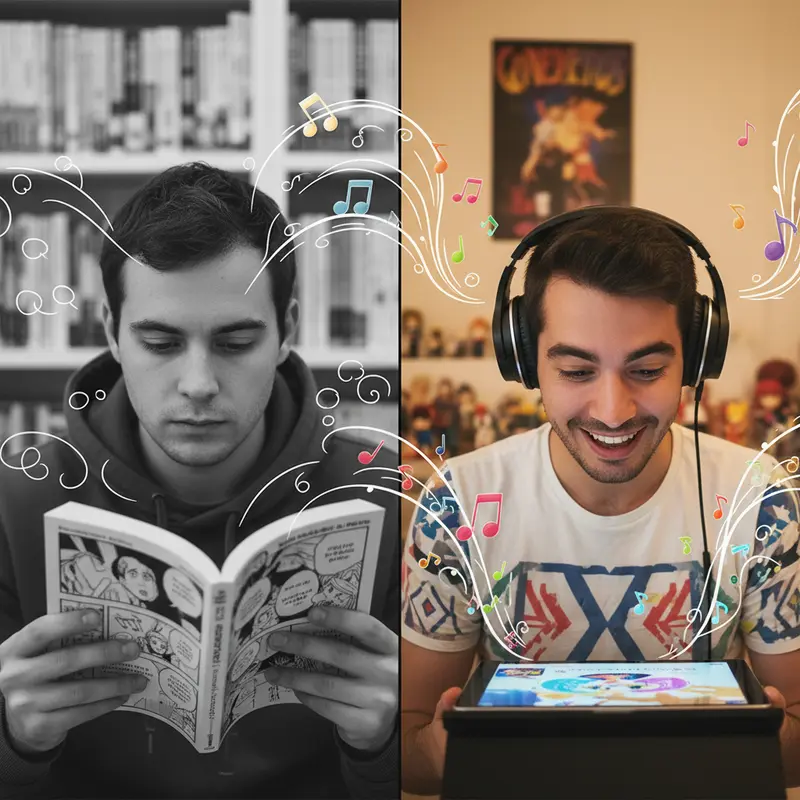
Within the vast realm of storytelling mediums, manga stands out as a uniquely interactive experience, empowering readers with the ability to dictate the tempo at which narratives unfold. Unlike the directorial control found in anime, where pacing is meticulously orchestrated through animation and sound design, manga offers a realm where reader autonomy reigns supreme. This characteristic bestows readers with not only control over the narrative pace but also transforms them into silent collaborators in storytelling.
Reader-Controlled Pacing: A Personal Expedition
Manga readers are masters of their own journey, moving through the panels as swiftly or as meditatively as they desire. This freedom results in an individualistic experience, where no two readers traverse a manga identically. A single manga page can be a swift sprint through action or a leisurely stroll that invites contemplation, determined solely by the reader’s engagement and mood at the moment.
Mangaka craft this dynamic by using visual strategies that implicitly guide pacing while respecting the reader’s autonomy. The deliberate arrangement and size of panels can create a sense of urgency or calm. For instance, an action-packed scene may employ a flurry of small panels packed closely together, propelling the reader through the chaos. In contrast, moments meant for introspection might spread across larger panels, using negative space and intricate detail to encourage pause and reflection.
This variability in pacing transforms the reading of manga into a more intimate activity, distinct from the passive viewing of anime. Here, the quiet intervals between panels allow the imagination to flourish, filling in emotional nuances and atmospheric details, making each reading experience as personal as it is poignant.
Visual Composition and Emotional Resonance
A considerable part of manga’s appeal lies in its ability to evoke emotion through carefully crafted visuals. Mangaka imbue each panel with varying degrees of detail, fostering engagement and emotional connections. A character’s subtle expression, the intricate backdrop of a scene, or the simplicity of a stark, empty panel can all compel readers to linger, drawing out emotions that enrich the narrative.
The balance between action and reflection plays a pivotal role in sustaining reader interest. High-energy sequences are often counterbalanced with periods of quiet character development, enabling reflections that prevent fatigue and deepen the reader’s emotional investment. The artistry of panel composition is where manga truly shines—offering not just a glimpse into the world of the narrative, but also inviting readers to contribute their interpretation and imagination.
Manga pacing becomes a collaborative dance between the creator’s visual intentions and the reader’s reception and interpretation. The inherent flexibility of manga allows it to resonate with a depth not always achievable in anime’s fixed timing, which may be limited by episode lengths and broadcast schedules.
The Symphony of Imagination
Not merely content to guide the eye, manga actively engages the mind, inviting readers to immerse themselves in realms of their own creation as influenced by the artists. Sparse backgrounds and abstract visual motifs serve as blank canvases upon which readers project their own interpretations, thereby participating in the storytelling process. Manga thus becomes a kind of imaginative symphony, where the creator sets the stage and the reader conducts the emotional undertones.
In conclusion, manga provides an engaging tableau where pacing is shared between the creator and the reader, blending structured design with the reader’s imaginative interpretation. Unlike the static tranquility of an anime viewing session, manga reading is a dynamic endeavor where every pause and linger brings the story to life in new, deeply personal ways. In this realm, manga invites readers to experience storytelling not as spectators, but as active participants in a narrative that unfolds uniquely with every turn of the page.
2. The Power of Reader-Controlled Pacing and Imagination in Manga
Manga, with its captivating ability to offer a deeply personal reading experience, thrives on the concept of reader-controlled pacing and imagination. Unlike anime where directors and editors dictate the timing and rhythm of storytelling, manga entrusts this control to the readers themselves, crafting an experience that is both introspective and immersive.
At the heart of manga’s unique allure is the concept of how the reader determines their journey through every page. Each panel, meticulously illustrated and arranged, grants readers the power to decide how long they linger and when they move forward. This engagement places readers at the helm, allowing them to explore emotional depths, unravel intricate storylines, or simply pause to admire the artistry.
The importance of panel layout and page design cannot be overstated. A carefully designed spread can dramatically alter the reader’s experience: large, singular panels can evoke profundity and gravity, demanding pauses for reflection and emotional resonance. In contrast, a series of small, rapid panels can create tension and urgency, mirroring the frenetic pace of action sequences.
Manga also embraces white space and silence—elements often seen as the unsung heroes of storytelling. These deliberate absences of action or dialogue provide room for personal reflection and interpretation. They invite readers to fill these voids with their own thoughts and emotions, creating a narrative that is as much personal as it is universal.
Perhaps one of the most compelling aspects of manga is its reliance on the imagination of the reader. The blank spaces, or “gutters”, between panels become the canvas where readers paint their own interpretations, bridging scenes with imagined motion and unspoken words. This gap-filling engages the reader actively, drawing them deeper into the narrative and allowing for a highly personal experience. Whether they are building upon layers of emotional context or projecting atmospheric moods through abstract backgrounds, readers become partners in storytelling.
For aspiring manga creators aiming to harness these techniques, several strategies are particularly effective:
- Vary panel size and layout to convey different narrative tensions and emotional beats.
- Utilize ample white space and moments of silence to encourage reflective pauses.
- Focus on in-between moments that capture life’s subtleties, enriching character depth and emotional appeal.
- Allow for discretionary interpretation by leaving elements unspoken or unseen, fostering an environment where the reader’s imagination can flourish.
Ultimately, the reader-controlled pacing in manga creates a cocoon of introspection, a space where the reader can immerse themselves wholly and profoundly in the world of ink and imagination. It’s a testament to the potential of static imagery to craft a narrative that transcends mere plotlines, embodying a dance between structured artistry and the limitless realm of the mind.
This unique aspect of manga makes it a poignant counterpart to anime’s director-controlled sensory experiences, as discussed in various media analyses and publications like the Anime-Trending Explained.
Final Thoughts
Manga and anime each offer unique storytelling experiences that cater to different preferences. Manga excels in providing rich, introspective narratives through detailed art and text-based interaction. Anime captures audiences with its vivid, auditory, and visual storytelling, adding an accessible dimension to narratives. Ultimately, what makes one medium ‘better’ hinges on individual values and how one connects with the story presented. Fans often embrace both for their complementary strengths, finding value in the diverse ways stories can be told.
Level up your style with anime-inspired sneakers, apparel, and accessories. At Otaku Sneakers, every piece is crafted to help you express your fandom with confidence and originality. Don’t settle for ordinary fashion—stand out with designs made for true fans. Ready to step into your world? Click below and discover your next favorite items. Shop now!
About Us
Otaku Sneakers was created from the growing passion for personalized anime merchandise — unique items that let every fan express who they truly are. Our store makes customization simple, allowing you to personalize products with your style, your fandom, and the designs you love.