

Introduction
Anime, a unique blend of art and storytelling, captivates viewers worldwide. From gloriously detailed landscapes to mind-bending action sequences, its visual brilliance knows no bounds. Here, we explore the anime that set the benchmark in art and animation.
Exploring Visual Masterpieces in Anime with the Most Stunning Art and Animation
1. Promare: A Visual Symphony of Futuristic Animation and Bold Artistry
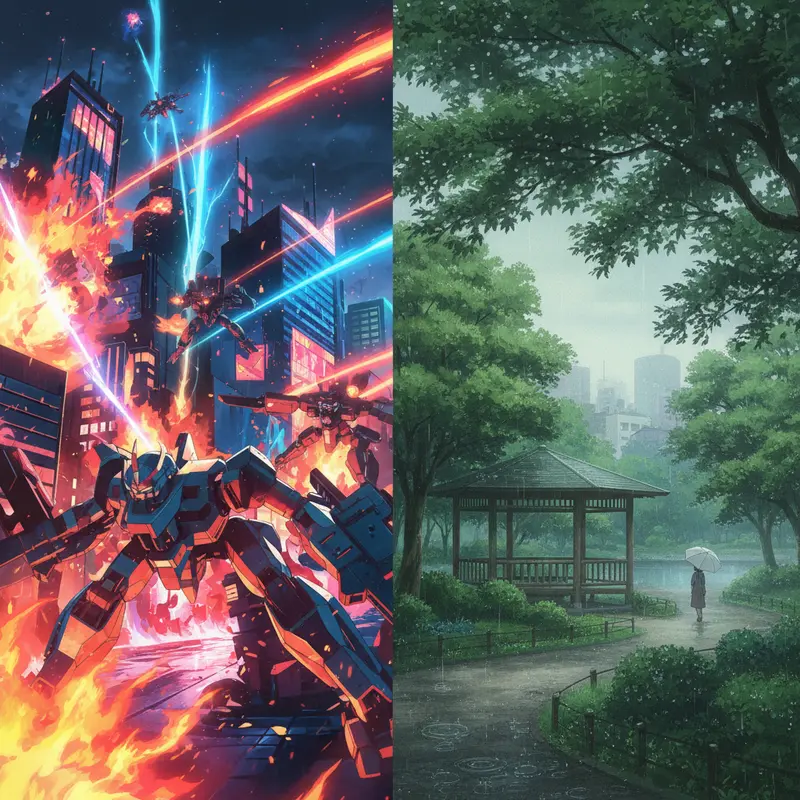
When it comes to pushing the boundaries of anime art and animation, few works have done so as boldly as Promare. Released in 2019 by Studio Trigger, this film sets itself apart through an audacious blend of artistic styles and narrative energy, creating a visually compelling spectacle that captivates audiences from the first electrifying frame to the last.
What truly distinguishes Promare is its seamless integration of 2D and 3D animation, a technical challenge that many other animated works grapple with. Instead of allowing these two forms to clash, the creators employed a distinctive technique: the application of flat colors across both 2D and 3D elements. This innovation resulted in a cohesive visual tapestry that sidesteps the usual dissonance between the two dimensions, manifesting instead as a harmonious and striking aesthetic reminiscent of an avant-garde art gallery. The use of bright, neon colors—shades of vivid purples and luminous mints—further enhances this effect, evoking a modern reinterpretation of retro polygonal forms.
Studio Trigger embarks on a stylized adventure, with Promare’s visual direction highlighting abstract polygonal fire designs and sharply angular shapes in both characters and their mechanized counterparts. This choice departs from the traditional intricacy often associated with anime, opting instead for abstraction to convey intensity and speed. This unorthodox approach results in a ‘noisy’ visual during action sequences, a deliberate decision that aligns with the film’s thematic focus on chaos and revolution.
The character and mecha designs in Promare are vibrant, their colors and dynamic lighting schemes breathing life into the screen, despite the apparent cacophony. These visuals are more than just aesthetic choices; they serve as visual metaphors for the story’s central themes, capturing the energy and emotional undercurrents of conflict and resolution.
Influences drawn from previous Studio Trigger works and other notable animations such as Gurren Lagann and DARLING in the FRANXX are evident, creating layers of familiarity that enhance the film’s unique flair. There is a palpable sense of nostalgia interwoven with innovation, making the viewing experience both comfortingly reminiscent and shockingly fresh.
In the realm of anime, where visual storytelling plays a critical role, Promare stands out as both a landmark and a pioneer. The film’s audacious creativity and willingness to transcend conventional art styles make it a benchmark for contemporary and future anime works. It is not just a movie but a dynamic expression of the potential that lies within animation—a vivid reminder that anime can be a limitless playground for artistic experimentation.
For anyone immersed in the world of anime, understanding how titles like Promare pave the way for future innovations is crucial. These creations not only entertain but also challenge conventional notions of narrative and artistic presentation. If you’re keen on exploring more about how evolving styles dominate and shape anime, consider exploring this insightful article on why anime continues to dominate trends.
2. Nurturing Nature: The Sublime Artistry of The Garden of Words in Anime
The Garden of Words: Nature and Detail in Anime Artistry
In the world of anime, The Garden of Words stands as a serene juxtaposition to the kinetic and electrifying visuals of works like Promare. Released in 2013 by the storied animation director Makoto Shinkai, this film is a poetic exploration of solitude, both in narrative and visual style. Renowned for its breathtaking imagery, The Garden of Words transforms the mundane setting of a Tokyo garden into a lush tapestry of emotional depth and painterly detail, showcasing Shinkai’s signature ability to infuse nature with elegance and significance.
At the core of The Garden of Words is its mesmerizing depiction of rainfall and the lush natural beauty of Shinjuku Gyoen—a park in the heart of Tokyo. Shinkai’s animation prowess is particularly evident in the film’s portrayal of rain, a motif he uses to evoke a spectrum of emotions from loneliness to renewal. The animated droplets dance across the screen with a lifelike fluidity, reflecting the characters’ internal landscapes and drawing viewers into a tangible, almost visceral experience. Much like raindrops piercing tranquility, the film’s visual nuances penetrate the emotional layers of its characters, creating an intimate viewing experience that resonates on multiple levels.
The meticulous detail Shinkai instills in every frame manifests through intricate backgrounds that echo traditional Japanese woodblock prints, yet are enhanced with modern digital precision. The verdant foliage, shimmering through various shades of green, imbues the animated environment with a sense of depth and realism. Each leaf is crafted with care, gently rustling with the breeze, inviting viewers to lose themselves in the animated artistry. This attention to detail is a hallmark that distinguishes Shinkai from his contemporaries, making each of his works akin to a moving art gallery.
Complementing this stunning visual tapestry is Shinkai’s skillful use of light and shadow to amplify the emotional gravitas of the narrative. As characters find solace under the park’s pavilion, the interplay of sunlight and shadows casts an ethereal glow, symbolizing moments of introspection and connection amidst an overarching solitude. The shifting weather patterns are mirrored in the characters’ evolving relationships, further tying the environment to their emotional journeys.
Beyond its visual opulence, The Garden of Words also distinguishes itself through its sound design. The patter of rain synchronizes with a subdued, atmospheric soundtrack, weaving a seamless harmony between audio and visual elements. This immersive sensory experience is quintessential Shinkai, where nature is not merely a backdrop but a pivotal character in its own right, shaping the narrative’s emotional rhythm.
Thus, The Garden of Words exemplifies the potential of anime to elevate the ordinary into something extraordinary, merging artistry with sensory storytelling to create an enduring cinematic experience. It stands as a testament to the power of animation to explore themes of connection and isolation through the serene beauty of natural landscapes, further solidifying anime’s status as a form of visual and emotional artistry.
For further exploration into anime’s visual artistry and its emotive storytelling capabilities, explore how anime dominates cultural landscapes.
Innovative Techniques and Artistic Excellence in Anime
1. Decoding the Cyberpunk Masterpiece: The Timeless Art of Ghost in the Shell
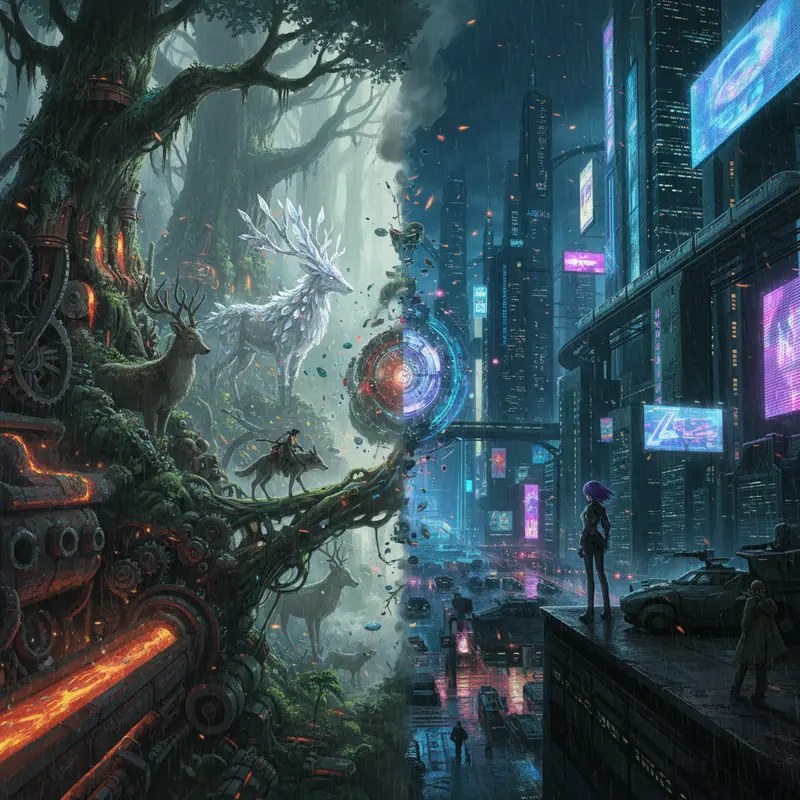
In the illustrious realm of anime, Ghost in the Shell emerges as a transformative work that has elevated the cyberpunk genre to new artistic heights. This 1995 classic, adapted from Masamune Shirow’s manga, has carved its niche by seamlessly intertwining existential inquiries with stunning visual artistry. Its influence extends far beyond the boundaries of traditional anime, affecting global perceptions of both anime and the cyberpunk aesthetic.
Ghost in the Shell is celebrated not only for its captivating animation but also for its profound exploration of identity, transhumanism, and the intricate relationship between humanity and technology. The film’s protagonist, Major Motoko Kusanagi, exemplifies this crossover between human consciousness and cybernetic enhancement. The visuals do more than merely support the narrative; they form an intricate tapestry that prompts questions about what it means to be human in an era where digital consciousness and synthetic bodies blur the lines of identity.
The film’s art direction evokes a noir etherealness through its use of shadowy urban landscapes, marked by neon glows and reflective surfaces that seem to mirror the inner turmoil of its characters. These elements are complemented by philosophical themes grounded in Eastern philosophies such as Taoism, which introduce a metaphysical layer to the narrative. The visuals powerfully portray the fusion of man and machine, crafting a compelling vision of a dystopian future where digital and physical selves coexist.
Ghost in the Shell transcended cultural boundaries by popularizing cyberpunk globally and influenced a wide array of media properties. Iconic films like The Matrix owe much of their thematic and aesthetic inspiration to this anime masterpiece. Its impact can also be seen in video games like Cyberpunk 2077, which draw on similar themes of identity and autonomy within corporate-controlled dystopias. This cross-media influence underscores the film’s role in shaping a cultural dialogue around the convergence of humanity and technology.
Furthermore, Ghost in the Shell revolutionized the portrayal of female protagonists in the cyberpunk genre. Major Kusanagi’s character challenges traditional gender roles, showcasing a nuanced narrative where a female lead navigates autonomy over her identity amidst a male-dominated genre. The animation thus not only propels the narrative but redefines the space for representation, encouraging a more inclusive discourse within the genre.
Ultimately, Ghost in the Shell’s legacy lies in its artistic brilliance and thematic depth. Its fusion of richly layered philosophical inquiries with visually arresting animation positions it as a seminal work that continues to inspire and influence. The anime’s skillful blend of philosophical musings and artistic innovation provides a blueprint for understanding both the artistic excellence and thematic complexity that typifies the best of cyberpunk illumination.
For those intrigued by the broader impact of anime on global culture, exploring related themes in Why Anime Dominates offers a compelling backdrop to Ghost in the Shell’s artistic brilliance.
2. Unveiling Kyoto Animation’s Vivid Storytelling: The Allure of Hyouka and Beyond
In the kaleidoscopic world of anime, Kyoto Animation stands as a paragon of artistic brilliance and emotive storytelling. While the studio boasts a repertoire of visually striking works, Hyouka emerges as a definitive example of Kyoto Animation’s distinct narrative style, characterized by its evocative imagery and richly textured characters.
Hyouka is a compelling piece, not only for its mystery genre but also for how it uses animation to convey the subtleties of emotion and thought. The vibrant art style immediately draws viewers into its intricately designed world, where every scene is painted with meticulous detail. This attention to detail extends beyond mere aesthetics, serving a purpose in storytelling by creating a canvas that reflects the inner worlds of its characters.
The use of light and color in Hyouka is masterful, blending seamlessly to evoke the mood of each scene. Whether capturing the nostalgic warmth of a sunset streaming into a classroom or the cool, introspective ambiance of Hōtarō Oreki’s deductions, the animation transcends the typical bounds of the medium. Such visual storytelling invites viewers to ponder alongside the seemingly mundane yet profoundly engaging mysteries faced by the Classic Literature Club.
Exploring further afield, other works from Kyoto Animation, such as A Silent Voice and Violet Evergarden, echo this deep narrative richness. A Silent Voice tackles themes of redemption and communication with a poignant, reflective art style that enhances the emotional depth of its characters’ journeys. Similarly, Violet Evergarden showcases meticulous era-authentic backgrounds and character designs, weaving a tapestry of visual and narrative beauty that grips the audience’s heart.
This vivid storytelling is not just about creating stunning visuals; it’s about merging art with narrative to evoke emotional responses. In a way, Kyoto Animation crafts experiences where viewers are not passive observers but active participants in the unfolding story. By embedding details that hint at underlying themes and character development, the studio elevates the medium, demonstrating the profound potential of animation as a form of artistic expression.
For fans and creators alike, Kyoto Animation’s work exemplifies the potential to unite technical prowess with profound storytelling. Each frame is a testament to the studio’s dedication to animation as an art form, setting benchmarks for not only artistic excellence but also for fostering a deep connection with the audience. As fans anticipate the future contributions of this illustrious studio, the legacy of Hyouka and other iconic works endures, inviting constant revisitation and appreciation.
For a deeper dive into some popular anime that fans love, Hyouka and similar titles are often discussed in favorite lists, showcasing their impact on the audience and the community. To explore more on school-themed anime that captivate with both narrative and art, visit this resource.
Emotional and Atmospheric Depths in Anime with the Most Stunning Art and Animation
1. Time and Emotion Intertwined: Animation’s Poetry in Millennium Actress
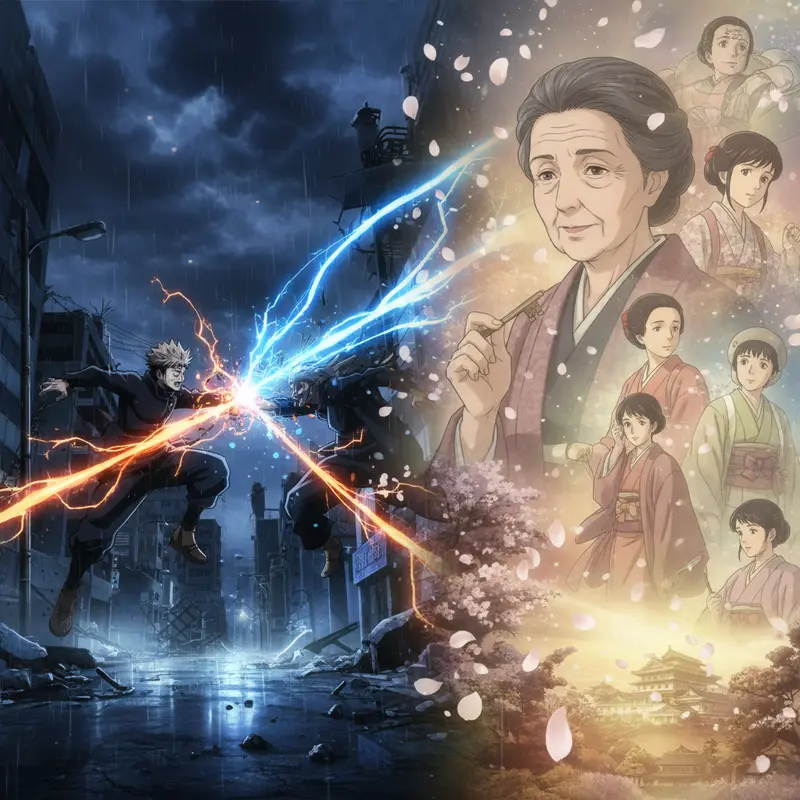
In the pantheon of anime that define visual and emotional storytelling, Millennium Actress emerges as a profound testament to the narrative power inherent in animation. Directed by the visionary Satoshi Kon, this film does not simply narrate a story; it orchestrates an emotional symphony that transcends mere plot and dialogue, employing animation to explore the deepest recesses of memory and longing.
One of the most compelling aspects of Millennium Actress is its innovative use of time and space to weave an intricate tapestry of Chiyoko Fujiwara’s life. Through avant-garde animation techniques, the film blurs the lines between the protagonist’s present reality and her past, as well as between her film roles and real experiences. Each scene transitions seamlessly into the next, merging different timelines into a single, coherent narrative. This fluidity embodies the character’s introspection, where memories and reality intertwine, echoing the non-linear nuances of human cognition (Anime Vigil Analysis).
The film’s color palette further augments its emotional narrative. Vibrant and expressive, it fluctuates with the emotional climate of each scene, enhancing the impact of the storytelling. Rather than serving as a backdrop, color becomes an active participant in the dialogue, changing to reflect emotion and era. This richness in chromatic expression imbues each frame with a distinctive ethos, allowing audiences to feel and sense the historical and emotional shifts within Chiyoko’s journey.
Millennium Actress employs what can be termed as an architecture of unreliable narration, skillfully manipulating the viewer’s perception of truth within the storyline. At one point, the documentary crew delves deeper into Chiyoko’s psyche, transitioning from mere interviewers to integral characters within her memories. This clever narrative device renders viewers accomplices in Chiyoko’s recollections, creating a shared uncertainty which mirrors the protagonist’s blurred reality—a longing that is both dream and history.
The animation poignantly captures the essence of frozen time through the tragedy of unfulfilled love. By juxtaposing Chiyoko’s reminiscences of a mysterious painter with Genya’s own unspoken affections, Kon highlights an emotional truth: unfulfilled desires are preserved in an idealized, static form, untouched by the complexities of lived experiences. As Chiyoko ages, her recollections, conveyed through increasingly fragmented and uncertain animation, poignantly reflect her cognitive decline—a stark representation of dreams slipping away, poignant and profound (YouTube Analysis of Millennium Actress).
In an era where spectacle often overshadows substance, Millennium Actress reaffirms the enduring potential of traditional 2D animation. By positioning animation as the medium through which inner emotions and the ethereal aspects of existence are made palpable, Satoshi Kon offers a window into the vast storytelling possibilities that animation affords, far beyond its visual allure. It is a compelling reminder that the truly spectacular unfolds not in grandiosity but in the quiet, profound exploration of the soul’s deepest longings.
2. Studio Ghibli’s Masterpieces: Crafting Emotional Landscapes with Animation
Studio Ghibli, renowned for its spellbinding storytelling and exquisite visual art, firmly established itself as a vanguard in the realm of animated cinema. Films like Princess Mononoke and Howl’s Moving Castle not only exemplify breathtaking animation but also weave profound emotional narratives that resonate across generations.
The Power of Nature and Humanity in Princess Mononoke
Princess Mononoke, directed by Hayao Miyazaki and released in 1997, revolutionized the way animation could convey a complex interplay between ecological preservation and industrial expansion. At its core, the film explores the tension between humans and nature through stunning visual metaphors. The fantastical landscapes, populated by gods and spirits, form a tapestry of vibrant colors and intricate details that draws the viewer into a world teetering on the brink of change.
The detailed backgrounds in Princess Mononoke serve as much more than mere settings; they are integral to the story. Lush forests juxtapose the stark, weaponized industry, crafting a visual narrative that speaks to the heart of environmental issues. The vibrant depiction of these opposing environments evokes a sense of wonder and concern, driving the emotional gravity of the narrative.
Magic and Migration in Howl’s Moving Castle
Howl’s Moving Castle, another magnum opus by Miyazaki, takes viewers on a journey through enchanted realms and the complexities of the human heart. Released in 2004, the film is celebrated for its imaginative art and profound emotional depths. It offers an insight into the chaos and beauty of life, mirrored through the literal mobility and transformation of the castle, which wanders across mesmerizing landscapes.
The animation in Howl’s Moving Castle uses a kaleidoscope of colors and shifting perspectives to portray both the tangible and the abstract. Howl’s enigmatic character and his ever-changing castle are mirrored by dynamic animation that captures the fluidity of identity and transformation. The oscillation between light and dark colors symbolizes internal turmoil and tranquility, conveying an emotional resonance that lingers long after the film ends.
The Subtlety of Emotion through Animation
Studio Ghibli’s artistry lies not only in its grand visuals but also in its ability to communicate emotion through subtle animation techniques. Characters’ facial expressions, body language, and the deliberate pacing of scenes create an intimate connection with the audience. This attention to detail fosters an emotional investment, making viewers feel as though they walk alongside the characters in their journeys.
The studio’s dedication to capturing the nuances of human emotion ensures that every moment, from the quiet, reflective scenes to the exhilarating action sequences, speaks volumes. Each film becomes a canvas where meticulous detail and sweeping artistry converge to tell stories of love, loss, and the enduring human spirit.
Discover more about the captivating storytelling and visual excellence of anime in this insightful blog.
Final Thoughts
Visual artistry in anime transcends mere entertainment, offering viewers a rich, emotive, and often spiritual experience. Masterpieces like ‘Promare,’ ‘Princess Mononoke,’ and ‘Jujutsu Kaisen’ continue to inspire and set new standards in animation. The fusion of art with storytelling ensures the enduring legacy of anime as an unparalleled visual medium.
Level up your style with anime-inspired sneakers, apparel, and accessories. At Otaku Sneakers, every piece is crafted to help you express your fandom with confidence and originality. Don’t settle for ordinary fashion—stand out with designs made for true fans. Ready to step into your world? Click below and discover your next favorite items. Shop now!
About Us
Otaku Sneakers was created from the growing passion for personalized anime merchandise — unique items that let every fan express who they truly are. Our store makes customization simple, allowing you to personalize products with your style, your fandom, and the designs you love.