

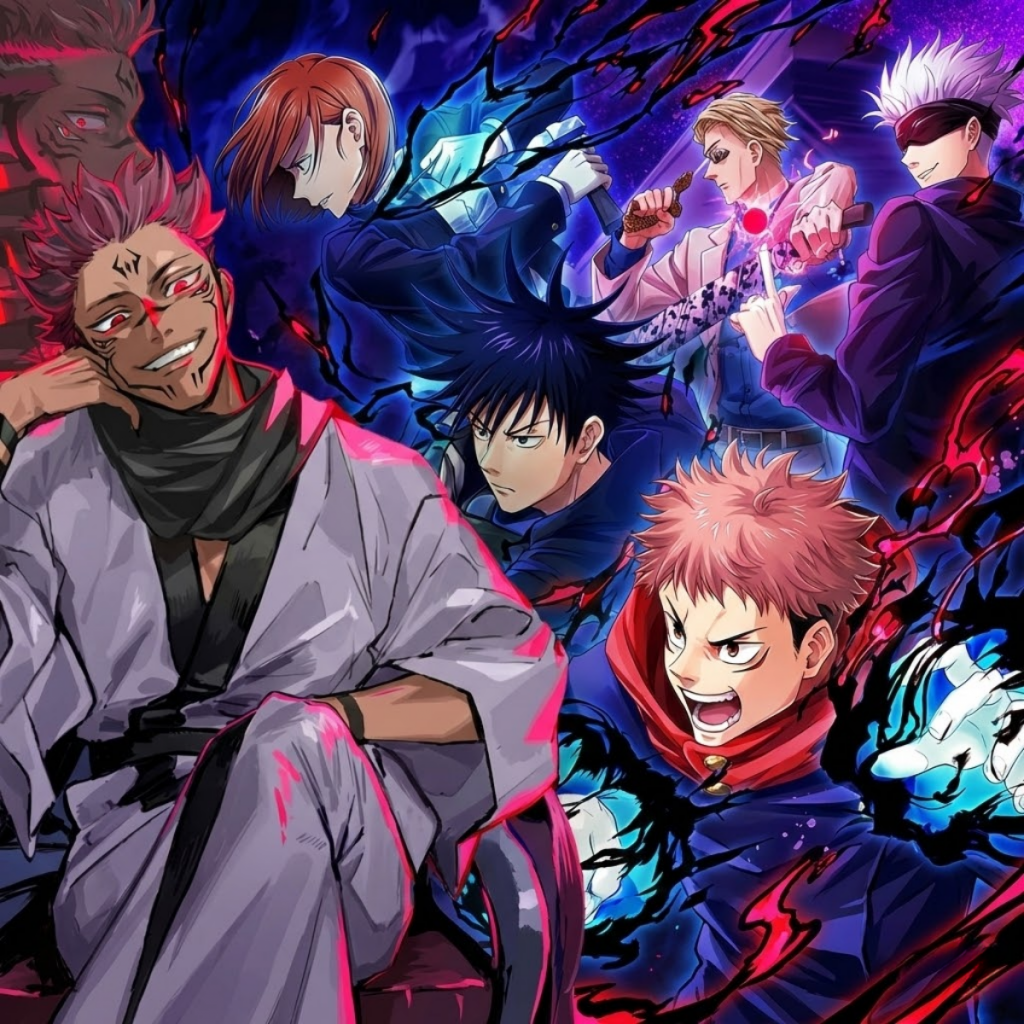
Jujutsu Kaisen Season 3: The Culling Game & MAPPA’s Narrative Evolution
In the aftermath of the Shibuya Incident, the landscape of Jujutsu Kaisen is marked by a unique narrative shift in Season 3. This arc traces the harrowing yet transformative journey of Yuji Itadori and his allies, haunted by the trauma of survival. Set against the backdrop of a chaotic Japan, the series weaves a tale of redemption as it critiques the brutal nature of the Jujutsu world and celebrates the triumph of will over despair. Through powerful symbolism and nuanced storytelling, Season 3 offers a critique of the “survival of the fittest” mentality while highlighting the enduring spirit of resilience. This article delves into the pivotal elements of this narrative, exploring its strategic depth, its symbolic portrayal of cursed energy, and the most powerful ideas that shape its message.
Strategic Depth: Decoding the Rules of Death
.png)
The emergence of the Culling Game in Jujutsu Kaisen Season 3 marks a drastic shift in the narrative, thrusting the story into a heightened plane of complexity. Masterminded by the enigmatic Kenjaku, the Game is essentially a nationwide battle royale designed to harvest immense amounts of cursed energy through brutal sorcerer combat. The stakes have never been higher: unsealing Gojo Satoru from the Prison Realm, thwarting Kenjaku’s plan for forced human evolution, and managing the catastrophic rise of Sukuna.
The anime skillfully integrates the return of Yuta Okkotsu—a formidable special-grade sorcerer—along with Hana Kurusu’s unique curse-nullifying abilities, introducing fresh variables to the equation. Through sharp visual storytelling, the anime clarifies the convoluted rules often debated in the manga, transforming the Culling Game from a chaotic puzzle into a gripping, cerebral war. For more insights on how anime adaptations handle complex plots, check out our article on Manga vs Anime: Which Tells the Story Better?.
Streamlined Storytelling: Pacing & Character Balance
.png)
Adapting the Culling Game arc presents a significant narrative challenge. With roughly 84 manga chapters to condense, the pressure to maintain pacing is immense. A common pitfall would be sacrificing character depth for non-stop action. However, the early episodes demonstrate MAPPA’s finesse, carefully adapting seven chapters across two episodes, allowing the audience time to process Yuji’s psychological turmoil before the battles truly begin.
MAPPA’s strategy for introducing new characters amidst a massive cast is equally commendable. By anchoring the narrative to established figures like Yuta—who re-enters as Yuji’s nominal executioner—the story balances plot mechanics with emotional weight. Scenes such as the quiet fireside conversation between Yuji, Yuta, and Megumi are meticulously staged, conveying relationships and intentions efficiently without relying on excessive dialogue.
Visual Innovation: Elevating Sorcery

In Season 3, the portrayal of complex abilities is significantly enhanced by technical visual upgrades. A crucial improvement lies in the sharper character designs, which improve clarity during high-speed combat. This is vital when distinguishing between multiple combatants and their specific Domain Expansions.
Color design serves as a key narrative tool, establishing distinct visual codes for different cursed energies and techniques. This allows the audience to intuitively distinguish power sources, making the intricate rules of engagement far easier to follow. Moreover, ambitious camera work and cinematic compositions communicate the mechanics of sorcery visually, reducing the need for heavy-handed narration.
Final Thoughts
Jujutsu Kaisen Season 3 has successfully mastered the complexity of the Culling Game, weaving a cohesive narrative defined by clarity, engaging pacing, and top-tier animation. If the series left a lasting impression on you, exploring anime-inspired custom designs is a great way to bring that feeling into everyday style.
|
Gojo Satoru JJK Custom AF1 |
Kento Nanami JJK Custom AF1 |
Nobara Kugisaki JJK Custom AF1 |


